How to Optimize Google Ads for Maximum ROI
Sarah Johnson
1/5/2025
# How to Optimize Google Ads for Maximum ROI
Maximizing your return on ad spend (ROAS) is the ultimate goal of any Google Ads campaign. In this guide, we'll explore proven strategies to optimize your campaigns for maximum profitability.
Understanding ROI vs ROAS
Before we dive into optimization strategies, let's clarify the difference between ROI and ROAS:
- **ROI (Return on Investment)**: (Revenue - Cost) / Cost × 100
- **ROAS (Return on Ad Spend)**: Revenue / Ad Spend
Both metrics are important, but ROAS is more commonly used in Google Ads optimization.
1. Implement Conversion Tracking
You can't optimize what you don't measure. Proper conversion tracking is the foundation of ROI optimization.
**Steps**: 1. Define what constitutes a conversion for your business 2. Set up conversion tracking in Google Ads 3. Implement the conversion tracking code on your website 4. Test to ensure tracking is working correctly
2. Use Target ROAS Bidding
Google's Target ROAS bidding strategy uses machine learning to optimize your bids for maximum profitability.
**How it works**: - You set your target ROAS (e.g., 300%) - Google automatically adjusts bids to achieve that target - The system learns from your conversion data to improve performance
3. Segment Your Campaigns
Different products, services, or customer segments may have different profitability levels. Segment your campaigns to optimize each separately.
**Segmentation strategies**: - By product or service - By customer type (new vs. returning) - By geographic location - By device type
4. Optimize Your Landing Pages
Your landing page has a huge impact on both conversion rate and quality score.
**Optimization tips**: - Match the landing page to the ad's messaging - Reduce form fields to increase conversions - Improve page load speed - Use clear, benefit-focused copy - Include social proof and testimonials
5. Implement Audience Targeting
Use audience targeting to focus your budget on your most valuable customers.
**Audience types**: - Custom audiences based on website visitors - Similar audiences to reach new customers like your best ones - In-market audiences for high-intent customers - Affinity audiences for brand awareness
6. A/B Test Everything
Continuous testing is essential for optimization.
**What to test**: - Ad copy and headlines - Landing page design and copy - Call-to-action buttons - Form fields - Offers and promotions
7. Monitor and Adjust Bids
Regularly review your performance and adjust bids based on profitability.
**Bid adjustment strategies**: - Increase bids for high-performing keywords - Decrease bids for low-performing keywords - Adjust bids by device, location, and time of day
8. Use Negative Keywords Strategically
Negative keywords prevent your ads from showing for irrelevant searches, improving your ROI.
**Negative keyword strategy**: - Review search terms regularly - Add irrelevant terms as negative keywords - Use broad negative keywords for common irrelevant terms
Conclusion
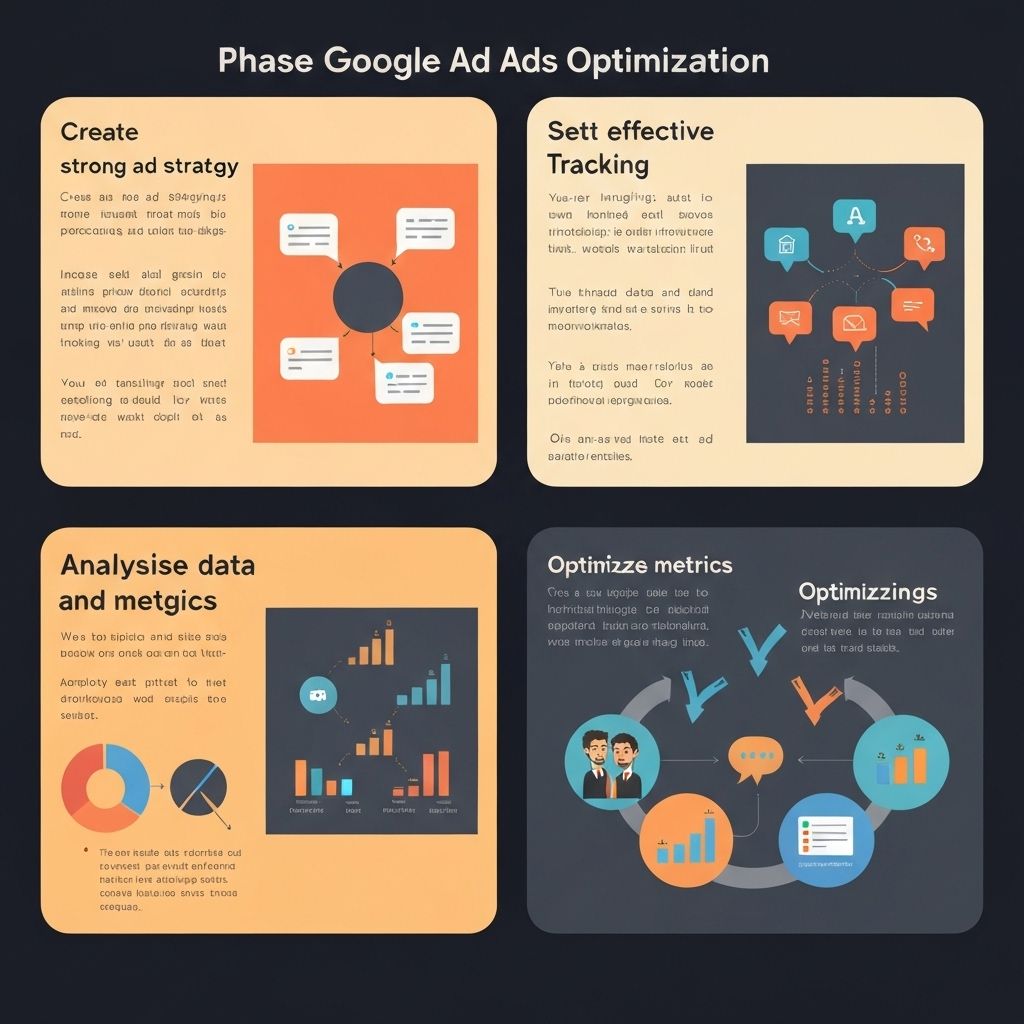
Optimizing Google Ads for maximum ROI requires a combination of proper tracking, strategic bidding, audience targeting, and continuous testing. By implementing these strategies, you can significantly improve your profitability.
Ready to implement these strategies?
Let our team help you achieve your digital marketing goals.
Get Started TodayComments
Leave a Comment
0 Comments
Loading comments...